myLAB Box Review: The Testing Service Built Around Why People Don’t Get Tested
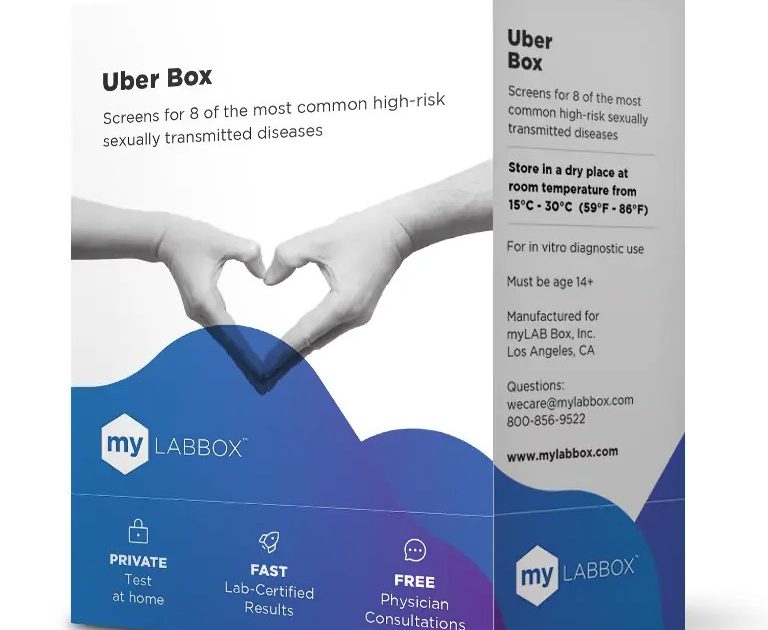
Public clinics often provide STI screening free or nearly free. myLAB Box charges $99 to $409. On price alone that looks like a losing proposition — until you notice that the company is not really selling a test. It is selling the removal of every reason people give for not taking one.
What the service offers
More than 50 tests spanning sexual health and STIs, fertility, wellness and nutrition, drugs and toxicology, COVID-19 and flu, and pet health — from single tests to panels covering 2 to 14 conditions. Pricing runs from about $99 for vitamin D to $409 for the 14-panel STD screen, with free shipping over $150 and no insurance copays.
The process: order discreetly, collect at home in around five minutes, mail back prepaid, receive results in a secure portal within two to five days, and take a free physician telemedicine consultation if anything comes back positive.
The barrier problem, and why it matters
The CDC emphasizes that many sexually transmitted infections are asymptomatic, which means screening is the only reliable way to know your status — and untreated infections such as chlamydia can cause lasting reproductive harm while being straightforwardly treatable when identified. The obstacle has never been medical; it has been behavioural. Clinic hours, travel, waiting rooms, the fear of a record appearing in an insurance file, and plain embarrassment stop enormous numbers of people from testing at all.
myLAB Box removes those specific frictions. Whether that is worth the fee depends entirely on whether they are the frictions stopping you.
The credential that decides accuracy
myLAB Box states it works exclusively with CLIA-certified and CAP-accredited laboratories. This is the fact that matters most in any at-home testing review: CLIA is the US federal standard governing clinical laboratory testing, and CAP accreditation adds rigorous peer inspection. Samples processed under those standards meet the same analytical requirements as samples drawn in a clinic.
The variable that remains yours is collection. A poorly taken sample produces a poor result no matter how good the laboratory, which is why following the instructions carefully matters more than most buyers expect.
The timing mistake that wastes money
Every infection has a window period — the interval after exposure before a test can reliably detect it. Testing the day after a worrying encounter frequently produces a negative that simply cannot be trusted, and people end up paying twice. Check the window guidance for the specific infections in your panel, and if recent exposure prompted the test, plan a follow-up at the appropriate interval.
Using it properly
- Choose a panel rather than a single test after a new partner; co-infection is common.
- Respect the window period instead of testing immediately.
- Follow collection steps precisely — volume and technique decide whether the lab can run your sample.
- Use the free consultation if positive, and tell partners so they can test as well.
- Make screening a routine rather than a one-off; tie it to a date you will remember.
Privacy, limits and honest caveats
Results are HIPAA-protected and testing is paid directly, so nothing reaches an insurer. That genuinely matters to people who avoid clinics for exactly that reason. But privacy only helps when paired with follow-through — a positive result needs treatment and partners need to know, which is precisely why the included physician consultation is more than a marketing bullet.
Some situations still require in-person care: active symptoms warrant an examination that no mail-in sample can provide, and pregnancy or uncertainty about a result deserve a clinician. Public-health guidance generally recommends at least annual screening for sexually active adults, with more frequent testing for those with new or multiple partners. This review is information, not medical advice.
Pros and cons
Strengths
- CLIA-certified and CAP-accredited laboratories
- 50+ tests including 2-14 condition panels
- Discreet shipping, HIPAA-protected results, no insurance reporting
- Free physician consultation on positive results
- Results within two to five days
Limitations
- Free or low-cost clinic testing is cheaper where accessible
- Comprehensive panels reach $409
- Self-collection introduces user error
- Window periods can produce false negatives if you test too early
Final word
myLAB Box is a behavioural product wearing a clinical coat, and that is a compliment. The labs are properly accredited, results arrive quickly, and a positive outcome leads somewhere rather than nowhere. If free clinic testing is genuinely accessible and you will actually go, use it. If something has been stopping you for months, this is one of the better ways to spend a few hundred dollars on your health.
Building screening into a routine
The most common pattern we see is a single anxious test followed by years of nothing. That is the least useful version of screening. Public-health guidance generally recommends at least annual testing for sexually active adults, with more frequent screening for people who have new or multiple partners — and consistency matters more than comprehensiveness. A modest panel taken reliably twice a year produces better information than an expensive 14-panel test taken once and never repeated.
A practical trick: attach screening to a date you already remember — a birthday, the start of a season, or the beginning of a new relationship. Removing the decision from the equation is the same principle that makes the at-home model work in the first place. And keep your results; a documented history is genuinely useful information to bring to any future clinician.
Frequently asked questions
Are the tests as accurate as a clinic?
Samples are processed by CLIA-certified and CAP-accredited laboratories, meeting the same analytical standards. Collection quality is the variable you control.
What does it cost?
From about $99 for vitamin D to $409 for the 14-panel STD screen, with free shipping over $150.
How quickly do results arrive?
Typically two to five days after the lab receives your sample.
Will my insurer see this?
No — testing is paid directly with no insurance involvement, and results are HIPAA-protected.
How often should I screen?
Guidance generally suggests at least annually for sexually active adults, and more often with new or multiple partners.
Affiliate & medical disclosure: This review is independent and for information only, not medical advice. Some links may be affiliate links; we may earn a commission at no cost to you, which never affects our score. Consult a licensed provider before starting any product.