ESA Pet Honest Review: What Happens After the Screening Quiz

The screening quiz takes about five minutes, and that is exactly where most people’s understanding of ESA letter services ends — and where the industry’s worst actors want it to end. There are websites that will sell you a “certified ESA letter” sixty seconds after your card clears, no human contact required, and there are landlords and property managers who have learned to spot those documents from across a desk. The entire question of whether an ESA service is legitimate comes down to what happens after the quiz.
So that is the part I investigated. I traced ESA Pet’s full process — quiz, payment, consultation, letter — talked through the legal mechanics, and stress-tested the one claim that matters most: will the document actually hold up when a landlord pushes back? Here is the honest account, including the moment in the process that surprised me most, which was the possibility of being told no.
The four steps, in order
ESA Pet’s pipeline is short but has one load-bearing stage:
- Step 1 — Pre-screening quiz. A few minutes of questions about your situation and your animal. This filters obvious non-candidates before anyone pays.
- Step 2 — Payment. $139 for one letter (housing OR travel/psychiatric service dog), $154 for both, with an optional $59 add-on if your landlord requires extra completed forms.
- Step 3 — The phone consultation. A real conversation with a licensed mental health professional who holds a license in your state. This is the stage the instant-letter mills skip, and it is the only stage that gives the document legal weight.
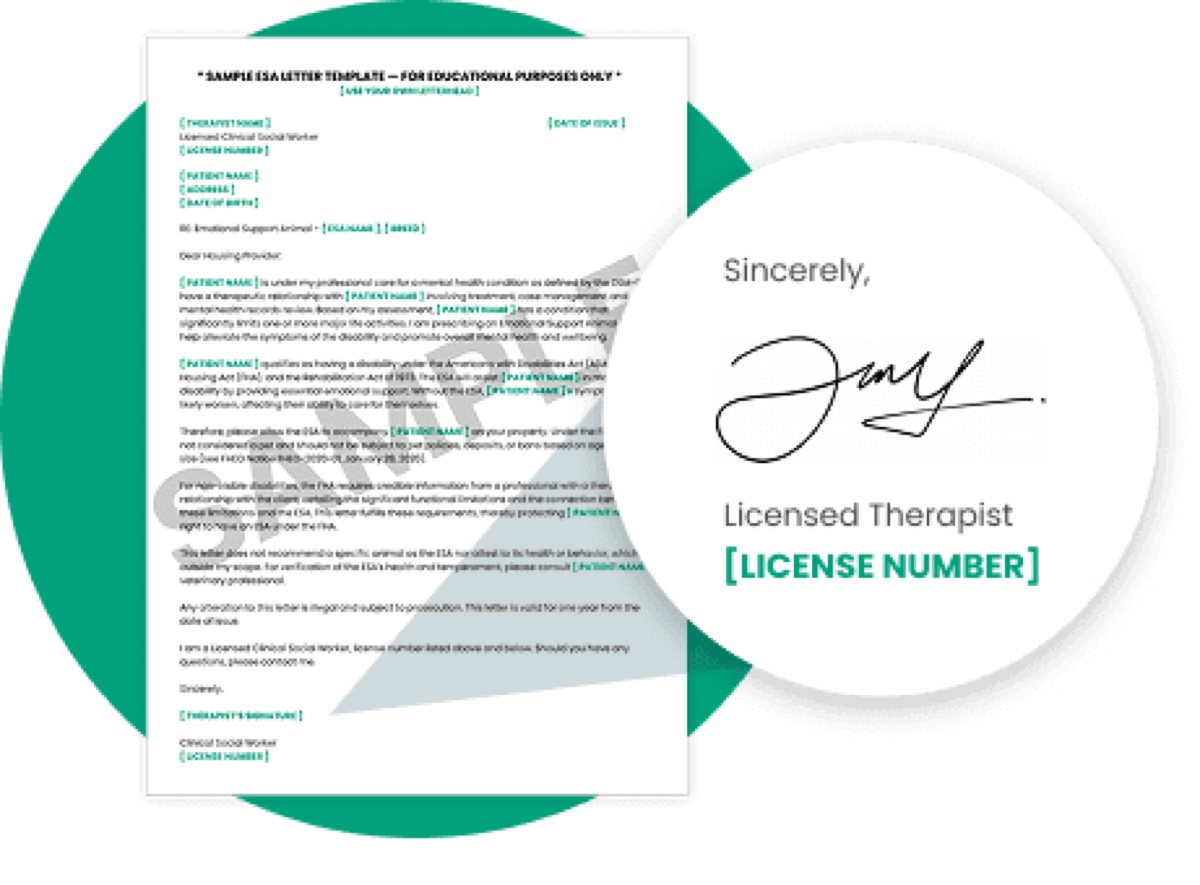
- Step 4 — The letter. If the clinician approves, a signed digital letter arrives by email within three business days, carrying the professional’s license details.

The consultation is the product
It is worth dwelling on step three, because it inverts how most people shop for these services. Under the Fair Housing Act, as interpreted in HUD’s guidance, a housing provider must reasonably accommodate an emotional support animal when a person with a disability-related need presents reliable documentation from a licensed professional — waiving pet fees and pet bans in the process. The operative word is reliable. A letter generated by a website without any clinical evaluation is not reliable documentation; it is a receipt. Landlords’ attorneys know this, and HUD’s guidance explicitly contemplates verifying that a real professional made a real assessment.
ESA Pet’s insistence on a state-licensed LMHP conducting an actual consultation is therefore not friction to tolerate — it is the entire value of the purchase. The letter you receive names a clinician licensed in your state, which matters because licensing is state-bound and a California therapist’s signature does little for a Texas lease dispute.
The “no” that proves the “yes”
Here is the detail that separates this review from an advertisement: approval is not guaranteed. The consultation is a genuine clinical screen, and clinicians can and do decline applicants whose circumstances do not support an ESA recommendation. If a service promises approval to every paying customer, its letters are worth what a rubber stamp is worth. ESA Pet’s willingness to say no is the strongest evidence that its yes means something — an inversion that feels uncomfortable when you are the applicant and reassuring the moment your landlord starts asking questions.
The financial risk is managed sensibly on both sides: there is a money-back guarantee if your letter does not work with your housing provider, but no refund once a letter has been approved and issued — a structure that protects you from a useless document while preventing the guarantee from becoming a free-trial loophole.
The math against “pet rent”
The economics resolve quickly for renters. Pet deposits commonly run $200–$500, and monthly pet rent of $25–$75 is now standard in large buildings. A valid ESA letter, which obligates the landlord to waive those charges under the FHA, pays for its $139 cost within a few months — and every month after that is savings. Add the emotional arithmetic — keeping your animal in a “no pets” building at all — and the one-time fee starts looking like one of the more obviously justified expenses in the rental universe.
Doing it right, start to finish
Take the quiz honestly rather than strategically; the clinician will be evaluating the real you on the phone anyway. Choose the $139 single housing letter unless you genuinely fly often or are pursuing a psychiatric service dog pathway, in which case the $154 bundle is the better buy. Ask your landlord in advance whether they require proprietary forms — that is what the $59 add-on exists for, and knowing early saves a round trip. Then treat the consultation like the medical appointment it is: honest answers, real history, actual needs.
How fast will I get my letter?
Within three business days of an approved consultation, delivered digitally by email. The quiz and scheduling usually add only a day or two on the front end.
Can my landlord reject the letter?
A landlord can scrutinize it, and HUD guidance permits verifying its reliability — which is precisely why the licensed, state-matched consultation matters. Valid letters from licensed professionals must generally be accommodated under the Fair Housing Act, with narrow exceptions.
What if I am not approved?
Some applicants are declined after the consultation — that is a feature of a legitimate clinical process, not a flaw. A service that never declines anyone is selling paper, not evaluations.
Does an ESA letter cover air travel too?
Airline rules for ESAs tightened in recent years, which is why ESA Pet separates the travel/PSD pathway. If flying is your priority, discuss the psychiatric service dog route during your consultation.
The verdict
ESA Pet passes the only test that matters in this category: its process would survive a skeptical landlord’s phone call. A real clinician, licensed in your state, making a real decision — delivered in three business days for $139, with a money-back guarantee if the letter fails to do its job. If your animal is genuinely part of your mental-health picture and your lease says “no pets,” this is the legitimate way through, and it is worth doing before the next lease renewal conversation, not after.
Affiliate & medical disclosure: This review is independent and for information only, not medical advice. Some links may be affiliate links; we may earn a commission at no cost to you, which never affects our score. Consult a licensed provider before starting any product.