Functional Training Explained: Why Movement Patterns Matter More Than Muscles
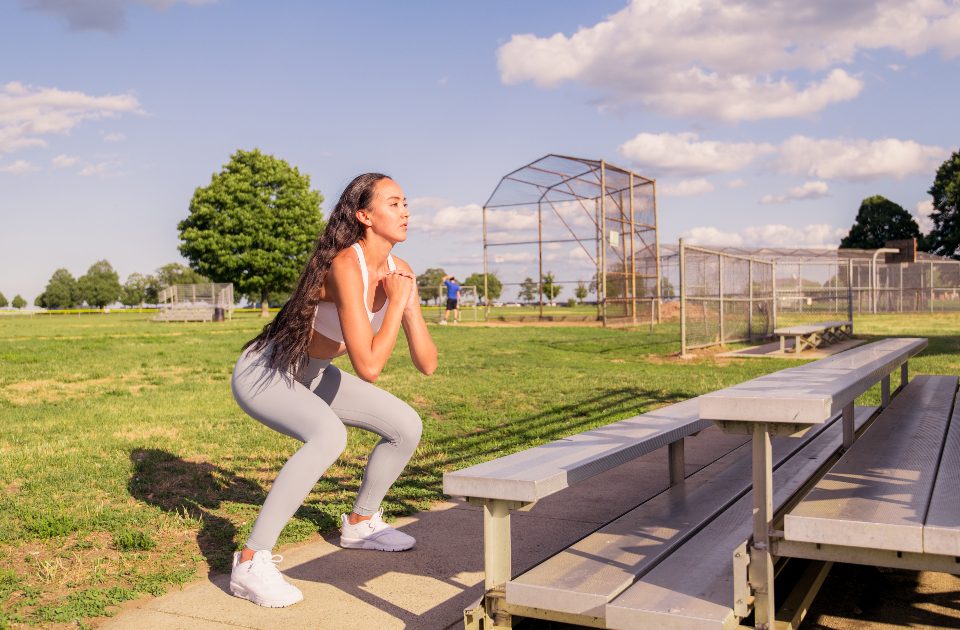
Ask ten trainers to define “functional training” and you’ll likely get ten slightly different answers, ranging from balancing on a wobble board to simply lifting weights while standing instead of sitting on a machine. The term gets used loosely, but underneath the marketing buzzword is a genuinely useful way to think about exercise selection — one organized around movement patterns rather than individual muscles.
Understanding this framework can help you build a more efficient, injury-resistant training program, whether your goal is athletic performance, everyday capability, or simply aging well.
What Functional Training Actually Means
At its core, functional training is exercise selected and organized around fundamental human movement patterns — squatting, hinging, pushing, pulling, carrying, and rotating — rather than isolating individual muscles one at a time. The idea is that training these patterns directly transfers more effectively to real-world tasks and athletic movements than training muscles in isolation.
This is a genuine shift in perspective from traditional bodybuilding-style splits (chest day, arm day, leg day), which organize training around muscle groups rather than the coordinated, multi-joint patterns those muscles actually perform in daily life and sport.
The Six Fundamental Movement Patterns
Most functional training frameworks organize exercises into a handful of core categories, each representing a pattern your body relies on constantly:
- Squat: bending at the hips and knees to lower and raise the body (squats, goblet squats, box squats)
- Hinge: bending primarily at the hips with a relatively straight spine (deadlifts, kettlebell swings, Romanian deadlifts)
- Push: moving load away from the body (push-ups, overhead presses, bench presses)
- Pull: moving load toward the body (rows, pull-ups, face pulls)
- Carry: moving while holding load (farmer’s carries, suitcase carries)
- Rotate/Anti-rotate: generating or resisting rotational force through the core (wood chops, Pallof presses)
A well-rounded functional program touches each of these patterns across a week, rather than overloading one (commonly pushing) while neglecting others (commonly hinging and rotation), which is a common imbalance in self-directed gym routines.
Why Movement Patterns Matter More Than Isolated Muscles
Real-world movement rarely isolates a single muscle. Picking up a heavy box, catching your balance on uneven ground, or carrying groceries up a flight of stairs all require multiple muscle groups firing in a coordinated sequence, not one muscle working in isolation while the rest of the body stays still. Training movement patterns builds the coordination and stability required for these coordinated actions, in a way that isolated exercises like a leg extension machine simply don’t replicate.
Research consistently shows that multi-joint, compound movement training produces better transfer to functional tasks and athletic performance than an equivalent volume of single-joint isolation work, largely because it trains the nervous system’s ability to coordinate multiple muscle groups together, not just the muscles’ raw strength individually.
Functional Training Across the Lifespan
The practical relevance of movement-pattern training becomes especially clear with age. The ability to squat down and stand back up, hinge to pick something off the floor safely, push open a heavy door, or carry groceries all depend directly on the patterns functional training reinforces. The National Institute on Aging highlights functional strength and balance exercises as key components of healthy aging, specifically because they preserve the capacity for these everyday movements far more directly than isolated muscle-building exercises alone.
For younger, athletic populations, the same patterns translate into sport-specific performance: a hinge pattern underlies sprinting and jumping mechanics, while rotational and anti-rotational strength supports throwing, swinging, and change-of-direction sports.
How to Apply This: Building a Movement-Pattern-Based Week
You don’t need a complicated program to train functionally — you simply need to make sure each fundamental pattern shows up regularly across your week:
- Day 1: Squat pattern focus (goblet squats or back squats) + push pattern (push-ups or overhead press) + carry (farmer’s carries)
- Day 2: Hinge pattern focus (deadlifts or kettlebell swings) + pull pattern (rows or pull-ups) + rotation/anti-rotation (Pallof press or wood chops)
- Day 3 (optional): A mixed session revisiting weaker patterns, plus balance or single-leg work to reinforce stability
This structure ensures no single pattern dominates the week while others are neglected — a common issue in routines built around muscle groups instead of movement, where pushing exercises (chest, shoulders, triceps) often crowd out pulling and hinging work.
Common Mistakes in “Functional” Programming
Ironically, some exercises marketed heavily as “functional” — unstable-surface training, elaborate multi-step exercise combinations, or exercises that sacrifice load for novelty — can actually reduce the ability to train each movement pattern with meaningful intensity. A basic barbell deadlift, performed on stable ground, trains the hinge pattern more effectively for most goals than a flashy but lightly-loaded variation on a wobbly surface.
The most functional approach for most people is usually the simplest: train the fundamental patterns consistently, with progressively increasing load or difficulty over time, rather than chasing novelty for its own sake.
Individual Variation and Caveats
Movement pattern needs and limitations vary based on joint health, mobility restrictions, and training history. Someone recovering from a hip or shoulder injury may need modified versions of certain patterns, and older adults or beginners should build competency with bodyweight or lightly loaded versions before progressing to heavier loads. A physical therapist or qualified trainer can help identify which patterns need the most attention based on your individual movement quality and goals.
Is functional training better than traditional bodybuilding-style training?
Neither is universally “better” — they serve different goals. Functional, movement-pattern-based training tends to transfer better to real-world and athletic tasks, while muscle-group-focused training can be more effective for targeted muscle growth. Many well-rounded programs blend both approaches.
Do I need special equipment for functional training?
No. Basic equipment like dumbbells, kettlebells, and a barbell can cover all six fundamental movement patterns effectively. Elaborate equipment isn’t required to train functionally.
Can functional training help with everyday injuries?
It can meaningfully reduce risk by improving strength and coordination in patterns used during daily activities, though it doesn’t eliminate injury risk entirely and isn’t a substitute for medical care when an injury does occur.
How often should I train each movement pattern?
Most people benefit from touching each of the six patterns at least once per week, ideally spread across two to three sessions, to build balanced strength and reduce the risk of overtraining any single pattern.
Affiliate & medical disclosure: This review is independent and for information only, not medical advice. Some links may be affiliate links; we may earn a commission at no cost to you, which never affects our score. Consult a licensed provider before starting any product.